Appearance
The universe
One universe holds every account, human and bot alike. It is built in layers, and the map lets you drill down and back up through all of them: galaxy → solar system → planet → moon. Every scale is observable — pick a system out of the galaxy, a world out of the system, a hex off a world's surface. The breadcrumb in the map's corner always names where you stand, clicking a crumb climbs back up, and Escape ascends one level.
The galaxy
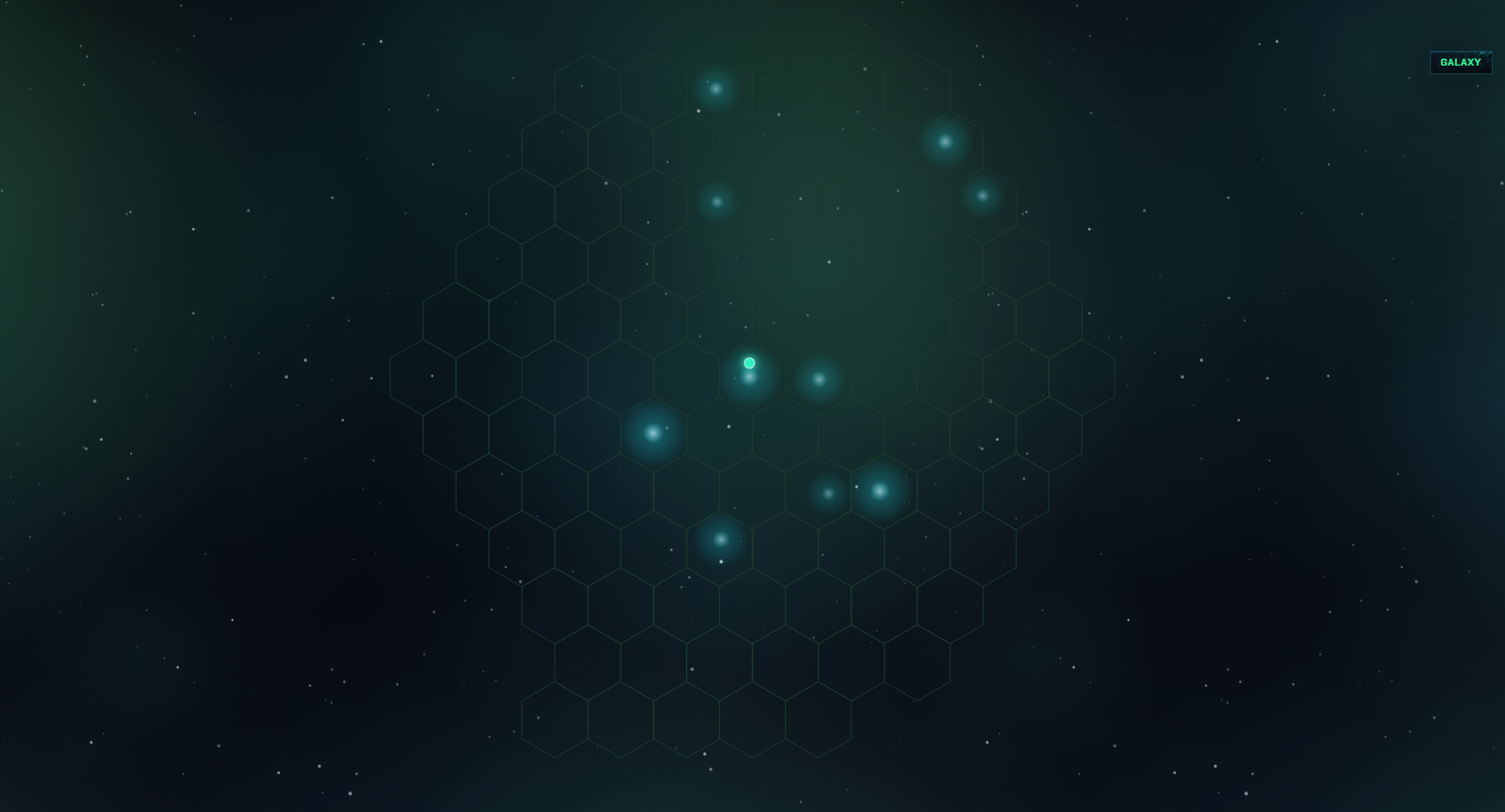
The top of the drill. Every cell of the lattice is a numbered system; the glow tells you at a glance where life is — a brighter cell holds more colonies. Click a system once to read its card, and again to dive into it.
The solar system
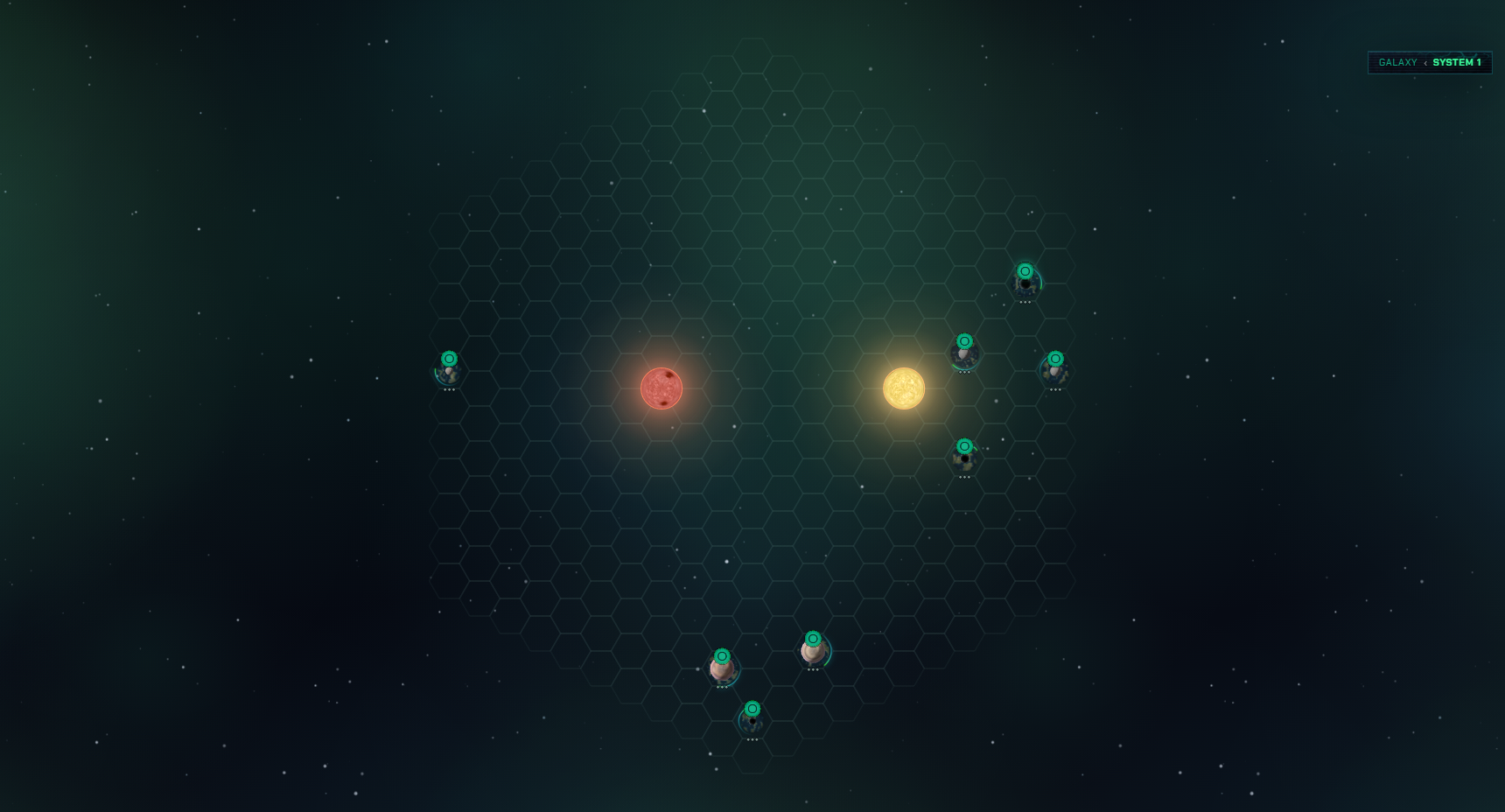
A system holds a handful of planets around its stars. Worlds carrying colonies wear a marker; select one and its card offers the way down — view planet — along with who lives there. This is the scale where you plan flights: missions launch from your colony to any site here or in any other system, and distance costs time and Hydrogen.
The planet
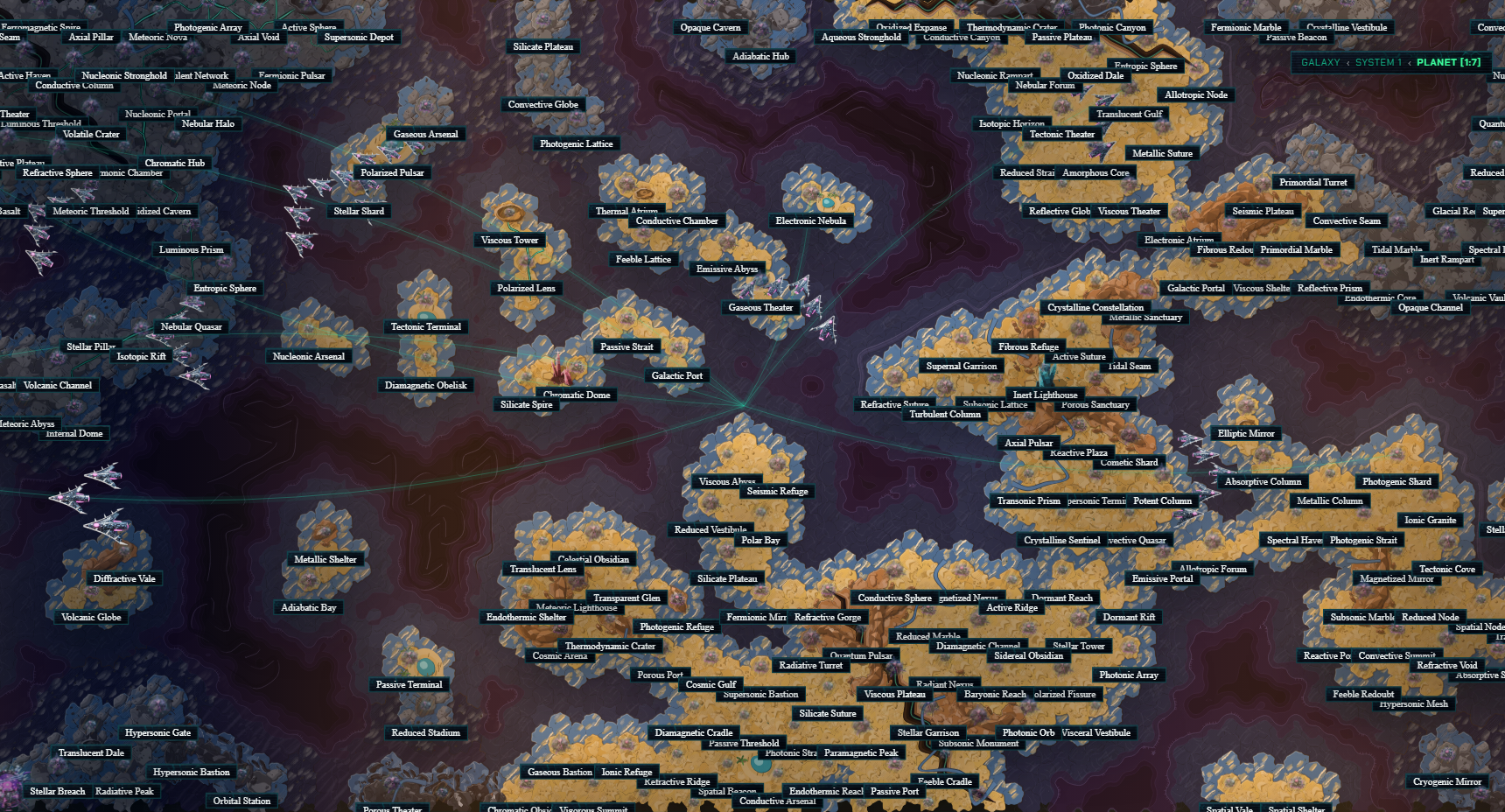
The ground floor. A planet's surface is a lattice of hexes — land, mountain, shore and deep water — and every colony stands on one of them. The lines crossing the surface are missions in flight. The ground is not decoration: the tiles within a colony's reach feed its production, the rarer biomes quicken research and flight, and deep water is where expeditions dive — the odd deep-water hex carries a Kraken mark that multiplies what a dive there brings back, at greater danger. Where you found a colony matters.
The moon
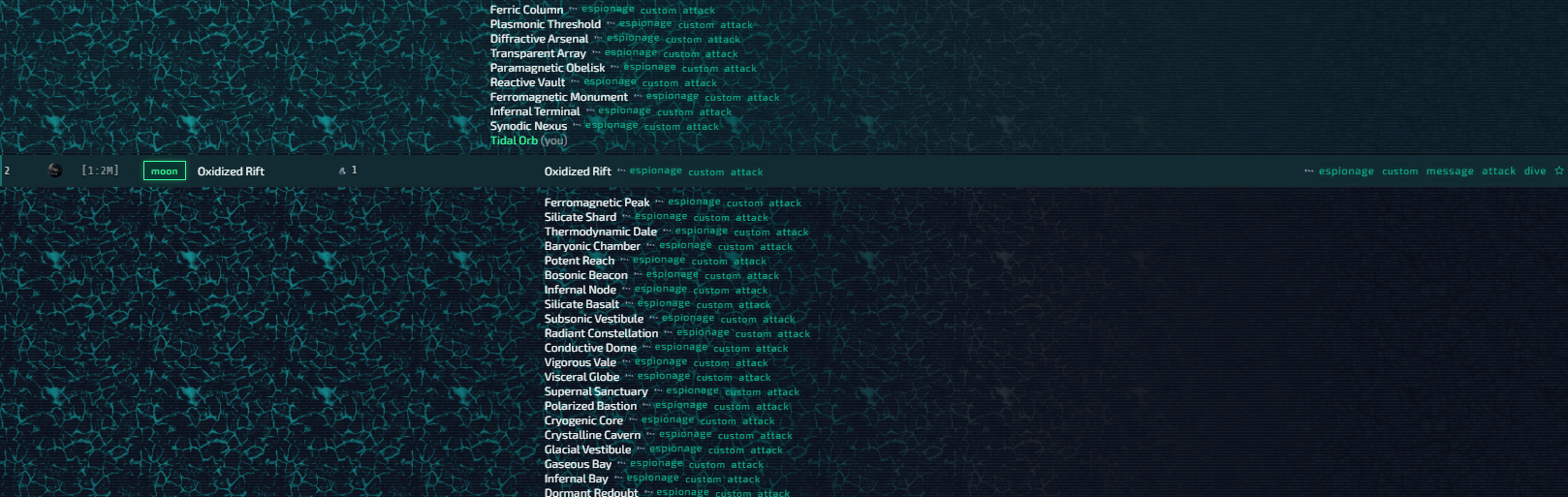
Some planets carry a moon: a smaller world riding its planet's address with an M — [1:2M] is the moon of planet [1:2]. A moon is a first-class world, not a rendering flourish: it is colonizable exactly as a planet is, with its own terrain and its own works, and every mission kind works at a moon address. On the Galaxy station, a row wearing the moon chip has one; click the chip to flip the row between the planet and its moon.
Two things set a moon apart. It never bears water — all bare rock and mountain — so expeditions cannot dive from one and no dive mark ever sites there. And it is a staging ground: every fleet that sails from a moon carries a standing speed advantage, which is the reason moons are worth fighting over. The moons the universe seeds may also carry a dormant garrison — see Bots.
Where the stations fit
The Galaxy station is this drill inside your command deck, with espionage and attack a click from every row. Empire reads your own colonies across all of it at once; Fleet flies between the layers.